 Daiwong's Website
👯♀️ Variant Chinese Characters
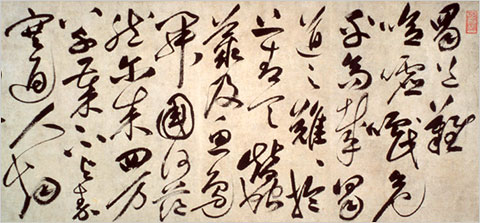
With over 20,000 Chinese characters (and good luck learning it all), you may see some characters especially in old texts or in regions where characters are written differently, despite having the same meaning. This could be similar to the letter “g” in English where there is the commonly handwritten one, and the closed loop g used in the Times New Roman font.
They are interesting as these characters are sometimes archaic or reflect the local culture of a region. (Especially Hong Kong)
☝️ Clarification
To avoid further confusion, variant Chinese characters are of course based on traditional Chinese. However to clarify the differences before people ask, there are two main forms of Chinese writing where there is simplified and traditional Chinese.
Chinese character variants have existed throughout history. However, different Chinese-speaking regions adopted different approaches to standardising characters over time.
🇨🇳🇹🇼 Standardisation in Mainland China and Taiwan
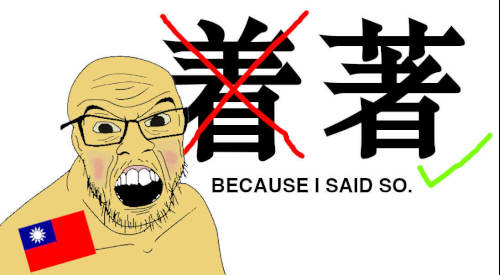
This part of the standardisation of Chinese characters which was done in the 20th century.
Taiwan (Republic of China) started making “Standard Traditional Chinese” which removed the use of alternative writing forms and made them obsolete, this imposed a “proper” form of Chinese for writers of the traditional script.
Examples include: 為 instead of 爲, 戸 instead of 户, 戶 and 線 instead of 綫Whereas, the People’s Republic of China created simplified Chinese. Which actually adopted some variant Chinese characters as part of their simplification process, but also removed other archaic variants that they saw no use for.
Examples include: 强 instead of 強, 从 instead of 從 and 网 instead of 網🇭🇰 Hong Kong
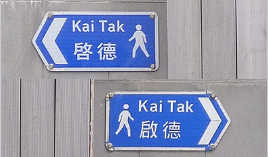
On the other hand, Hong Kong did not enforce strict standardisation historically due to being under British rule, they never implemented language reforms.
As a result, many traditional character variants continued to be used in everyday life like on signboards, in handwriting, and in regional texts which are used by schools, publishers and signmakers.
People may choose to use variant characters due to tradition, personal preference or convenience leading to the continued use of old variants.
Such as the word “inside” written as 裏 instead of 裡 which is used in Taiwan. The simplified form of the character would be 里 which could also mean kilometre.
❇️ Example of Variants
I will be providing variants that are commonly seen in Hong Kong, as Hong Kong is one of the few places where variants are still commonly used.
Variants for names

Chinese names use variants all the time, this may be due to the name suiting the individual better for Feng Shui or just that it “looks” better. Examples include singer Raymond Lam where his name is written as 林峯 as opposed to 林峰 which is the standard form. Or Danny Chan where his name is written as 陳百强 (which could be seen in his older albums) where the standard form would be written as 陳百強.
HSBC

Funnily enough, this is actually the character used for the Chinese name for the bank, it uses the variant character 滙 as opposed to the standard form 匯for their name.
Cup
The character for a cup where you drink from in Hong Kong is written as 杯, whereas a “cup” such as a “World Cup” would be written as 盃 (which is a variant).
Village/Estate
Both 村 and 邨 mean village. However in Hong Kong, 村 would be used to refer to a village, whereas 邨 would be used to refer a government estate which has government housing.
Foods
For noodles, the standard form would be 麵 due to phonetics, whereas the alternative form which can be seen in some older noodle shops would opt for 麪 instead.
The standard form of “Chicken” is written as 雞 whereas the variant form is written as 鷄. The differences lie in the standard form using the radical for a short tailed bird, whereas the variant uses the radical for birds in general. Ironically the simplified form 鸡 uses the variant but has been altered to simplify it further.
Speech
Hongkongers would commonly write this character as 説 whereas the standard form is written as 說.
⚠️ Implication
The issue with both standardisations is that due to the sheer population sizes of both China’s, they have eroded the regional variants that are used by different communities.
Such as Singapore and Malaysia’s adoption of simplified Chinese, or even the handover of Hong Kong with the Hong Kong educational bureau imposing the standard Taiwanese form of traditional Chinese characters which causes conflict with locals.
Even with the rise of computers, since Taiwan’s system has become the standard for traditional Chinese. This has affected the youths relationships towards characters (often regarded as computer text or 電腦字). Making them opt for the Taiwanese standards instead such as 著 instead of 着.
The elimination of variants remove the creativity involved with the Chinese language and I believe it should be preserved. It is a symbol of cultural continuity and preserves historical richness that has been lost everywhere else.